
The Enneagram Oracle Boutique
⭐⭐⭐ Listen to your soul ⭐⭐⭐
The Enneagram Oracle Boutique
⭐⭐⭐ Listen to you soul ⭐⭐⭐
📱 Coming soon: 👉 mobile app to easily make card readings yourself on your phone!
🌎 Worldwide Delivery - 🚚 Free Shipping for all Oracles
🕊️ Millennial Wisdom
🎯 4 Ultra-Precise Oracles
💎 Exclusives - Self-Published
🕊️ Millennial Wisdom
🎯 4 Ultra-Precise Oracles
💎 Exclusives - Self-Published
How to Identify Your Enneagram Type: A Comprehensive Guide to Self-Discovery
Introduction: Why Knowing Your Enneagram Type Is Essential
The Enneagram is more than just a personality typing tool; it’s a powerful method that provides deep insights into your motivations, behaviors, and most intimate fears. Understanding your Enneagram type can transform how you perceive yourself, how you interact with others, and even how you approach life as a whole.
However, with nine distinct Enneagram types, it can be challenging to determine which one fits you best. This article will guide you step by step in identifying your Enneagram type accurately. Whether you’re a beginner or already familiar with the Enneagram, this comprehensive guide will equip you with all the necessary information to discover your type.
What is the Enneagram? A Brief Introduction
Origins and Foundations of the Enneagram
The Enneagram has its roots in ancient spiritual traditions but was popularized in the modern world by psychologists and personal development experts. This model divides human personalities into nine distinct types, each with its own motivations, fears, and ways of responding to situations.
The Nine Enneagram Types
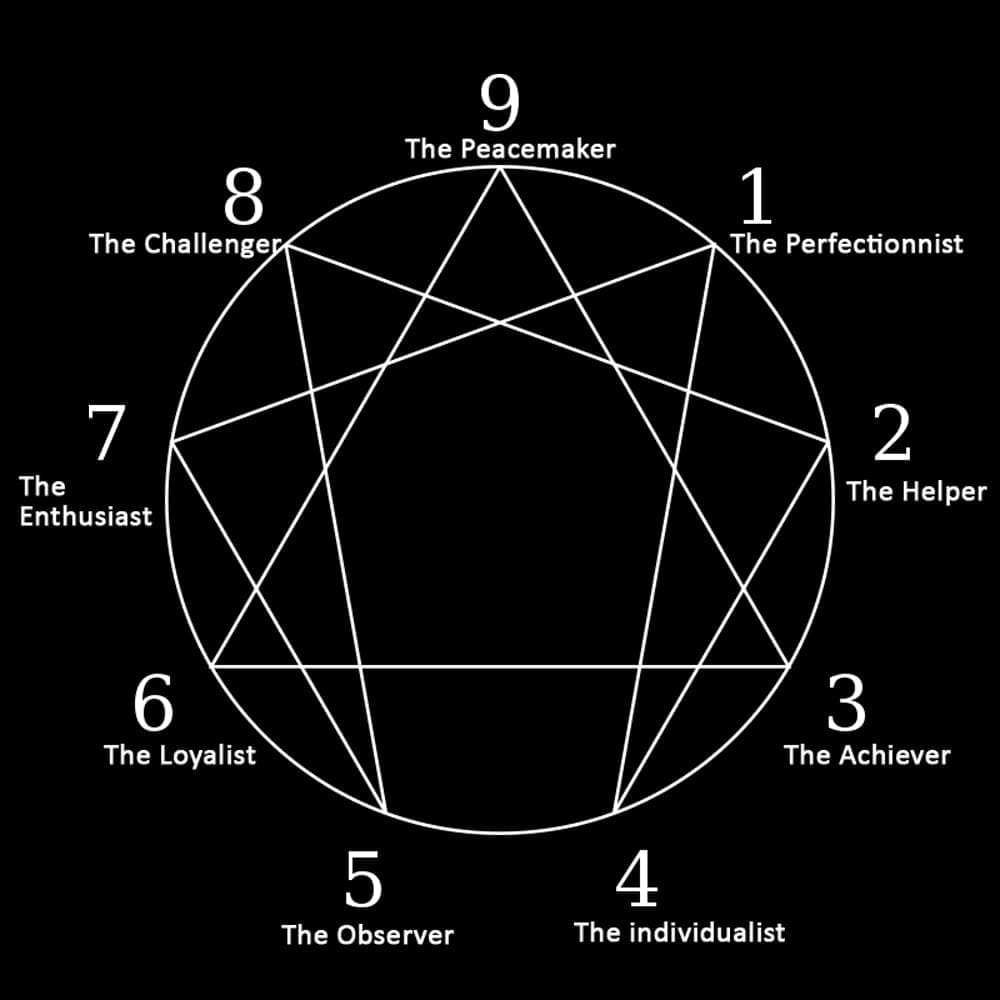
The nine Enneagram types are often described as follows:
1. The Perfectionist – Driven by the need to do what is right.
2. The Helper – Motivated by the desire to feel loved through helping others.
3. The Achiever – Driven by the need for success and admiration.
4. The Individualist – Motivated by the pursuit of authenticity and self-expression.
5. The Investigator – Driven by the need to understand and conserve energy.
6. The Loyalist – Motivated by the need for security and support.
7. The Enthusiast – Driven by the desire for enjoyable experiences and avoiding pain.
8. The Challenger – Motivated by the need for control and independence.
9. The Peacemaker – Driven by the need for inner peace and stability.
Each type has its own characteristics, but it’s crucial to understand that the Enneagram goes beyond mere outward behaviors to explore the deep-seated motivations behind them.
Why Is It Difficult to Determine Your Enneagram Type?
The Complexity of Human Motivations
One reason it can be challenging to determine your Enneagram type is the complexity of human motivations. Two people might behave similarly but for entirely different reasons. For example, a Type 3 (Achiever) and a Type 1 (Perfectionist) may both be hard workers, but the former is motivated by success and recognition, while the latter is driven by a desire to do things correctly.
Wings and Subtypes
In addition to the nine main types, the Enneagram also includes “wings” and “subtypes.” Each main type can be influenced by an adjacent type, known as a wing, which adds an extra layer of nuance to your personality. Moreover, subtypes are based on three fundamental instincts: self-preservation, sexual (or one-to-one), and social, which further alter how a type manifests.
The Influence of Environment and Experiences
Your environment and life experiences can also influence how you perceive your type. For example, someone might behave like a Type 6 (Loyalist) due to a strict upbringing that fostered caution and vigilance, even if their deeper motivations align more with another type.

The Basics of the Enneagram. Made Easy.
🎁 Subscribe to the newsletter and receive a free e-book to discover the enneagram and all the cards of the General Enneagram Oracle!
Steps to Identify Your Enneagram Type
1. Understand the Nine Personality Types
The first step in determining your Enneagram type is to thoroughly understand the nine types. It’s important not to limit yourself to superficial descriptions but to dive deeply into the motivations, fears, and desires of each type. Resources like this blog article, "How to Determine Your Enneagram Type: A Complete Guide to Understanding the 9 Personality Types," can be a helpful starting point.
You can also explore The 4 Enneagram Oracles You can also explore the Enneagram Oracles (General, Sentimental, Professional, and Mystical) to familiarize yourself with the nine personality types in a precise and comprehensive manner. They offer a playful yet profound way to learn (click the image for more information).




Type 1: The Perfectionist
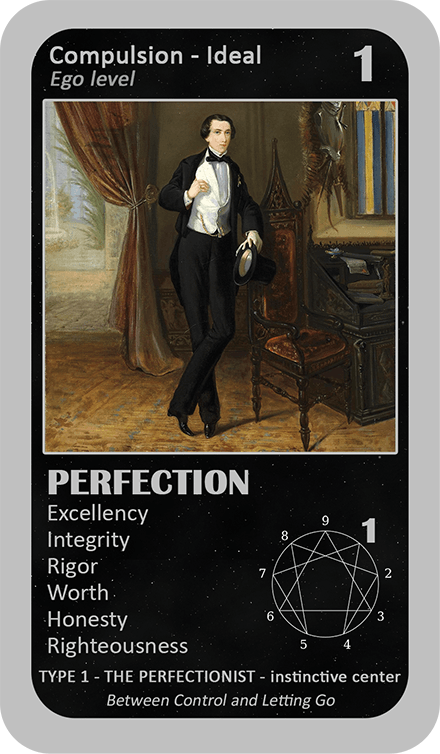
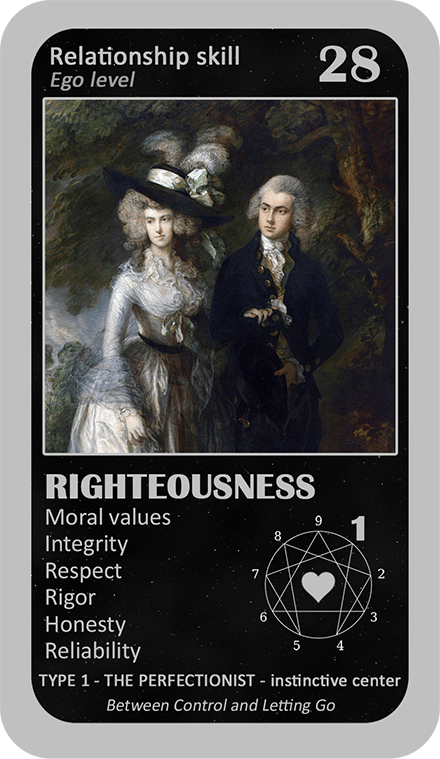
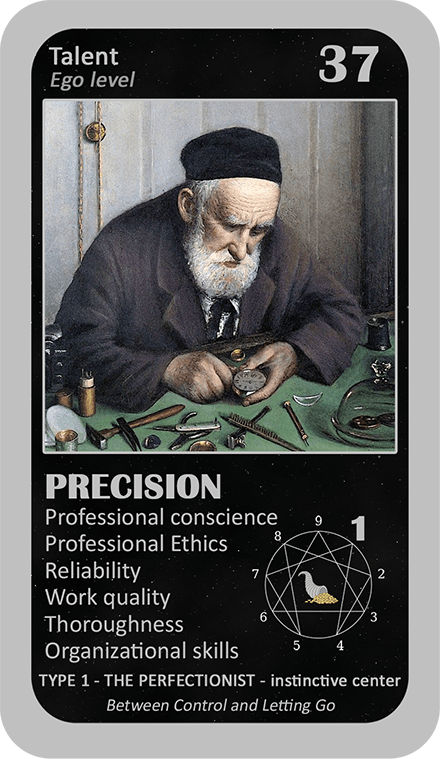
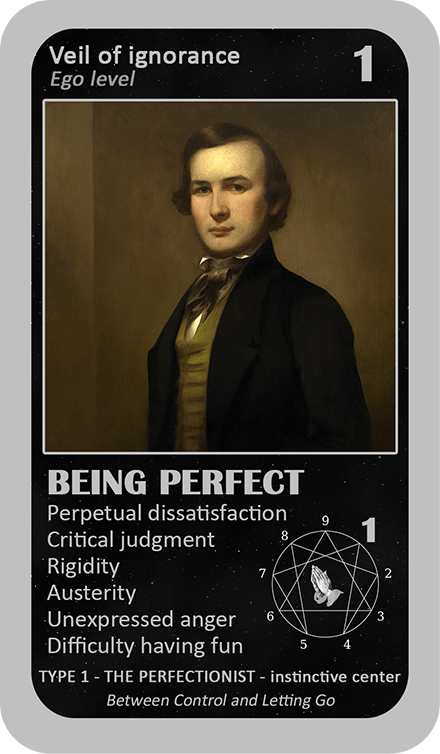
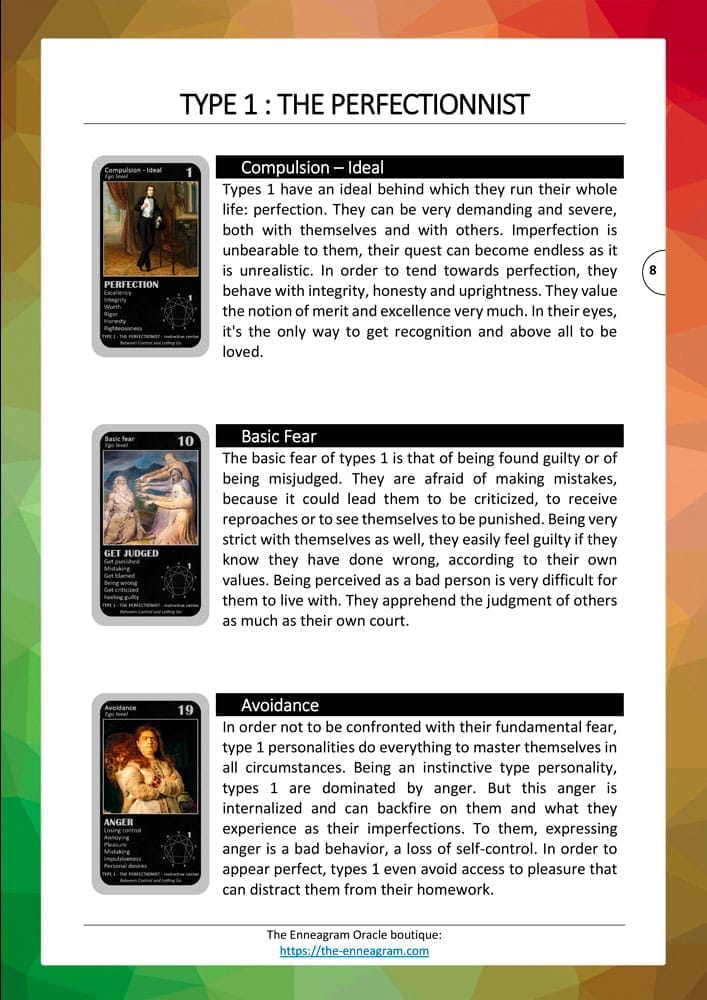
Perfectionists are driven by the need to do the right thing and correct mistakes. They seek to improve the world around them and are often perceived as disciplined, honest, and ethical.
Perfectionists are often rigid in their pursuit of morality and justice. They set high standards for themselves and are motivated by a strong sense of duty. However, their relentless pursuit of perfection can lead them to be critical of both themselves and others. Their path to growth involves learning acceptance and understanding that perfection is not always necessary to be valued.
Type 2: The Helper
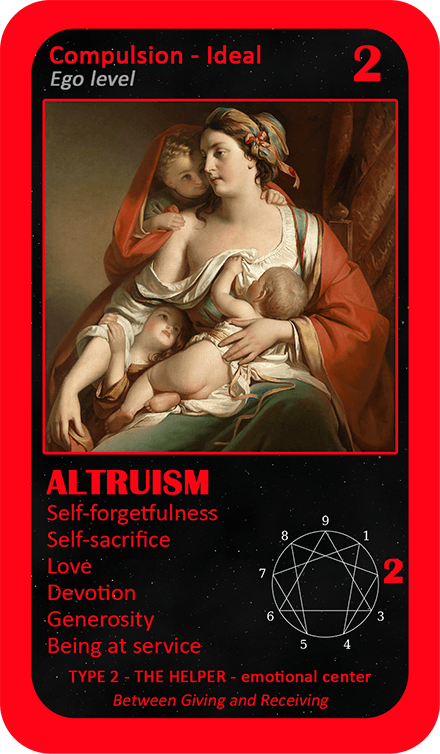
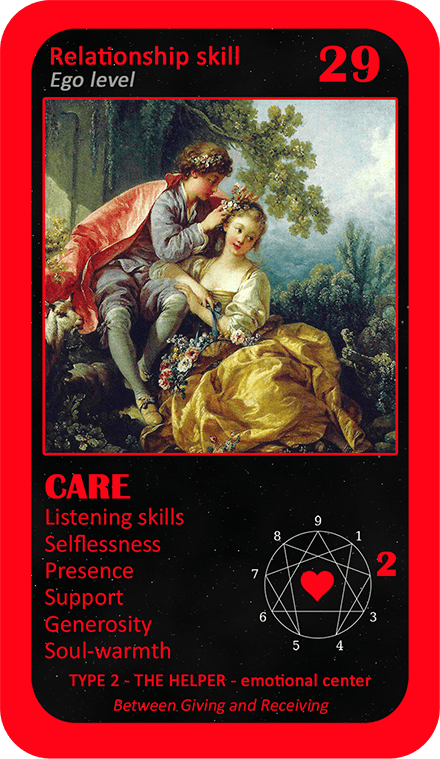
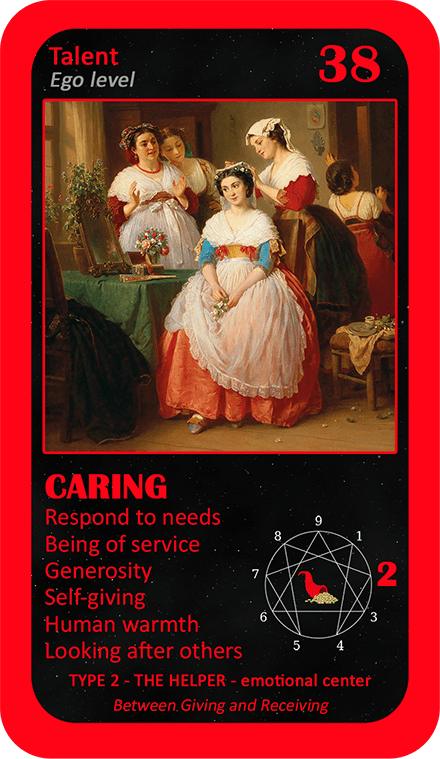
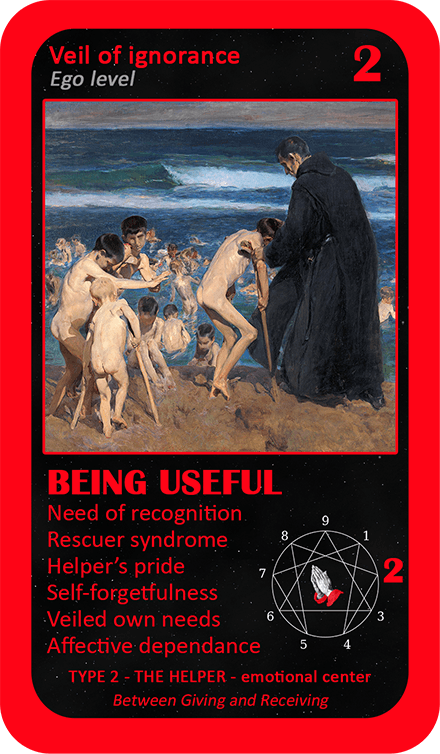
Helpers are motivated by the need to feel loved and needed. They focus on the needs of others and strive to be indispensable, though they may sometimes ignore their own needs.
Helpers are natural helpers, always ready to offer love and support to others. However, this generosity can sometimes mask an underlying desire to be needed or loved. They must learn to set boundaries and recognize their own intrinsic worth, regardless of the services they provide.
Type 3: The Achiever
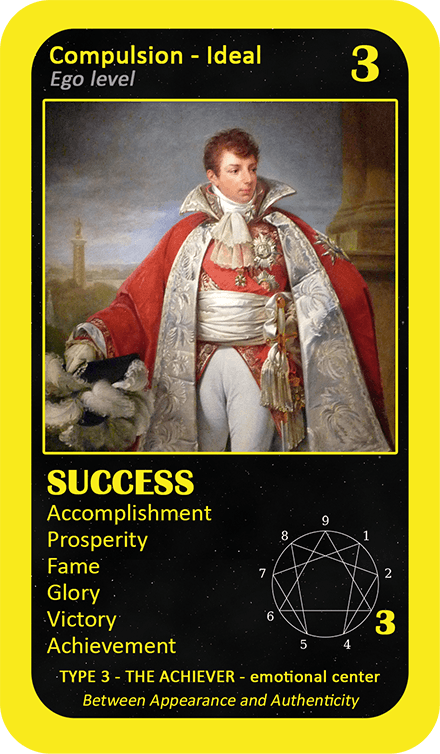
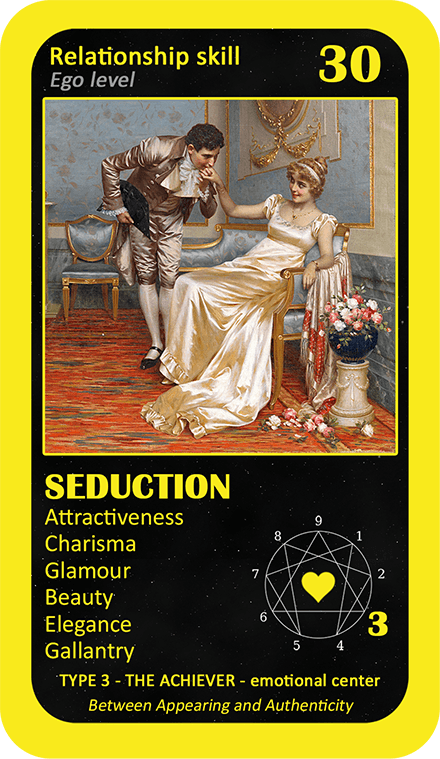
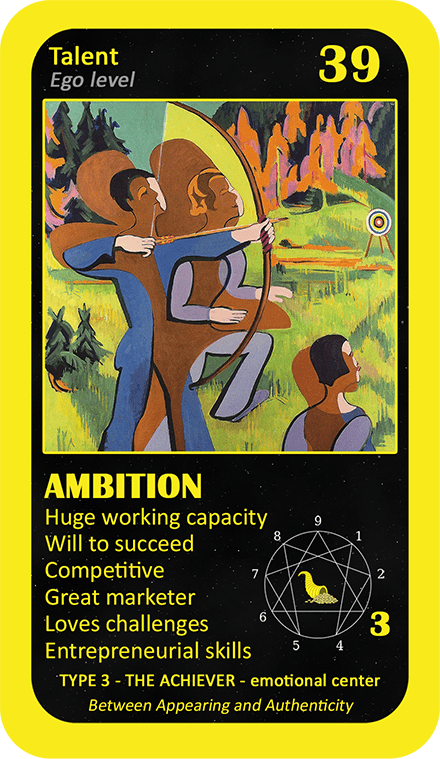
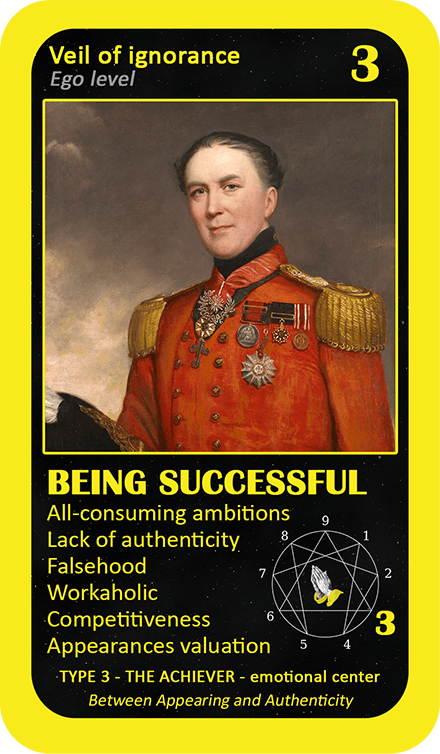
Achievers are motivated by success and the desire to be admired. They are goal-oriented and seek to accomplish a lot, often based on the image they wish to project.
Achievers are dynamic and ambitious individuals who strive to excel in all aspects of their lives. Their success is often measured by external accomplishments, which can lead them to over-identify with their public image. They must work to balance their need for success with a true connection with their inner self.
Type 4: The Individualist
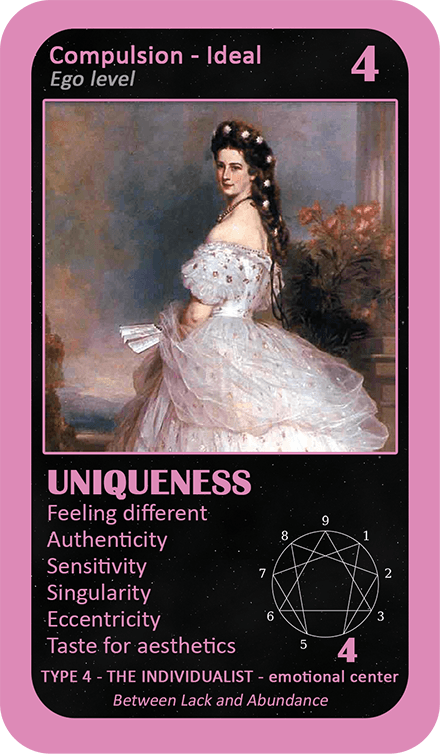
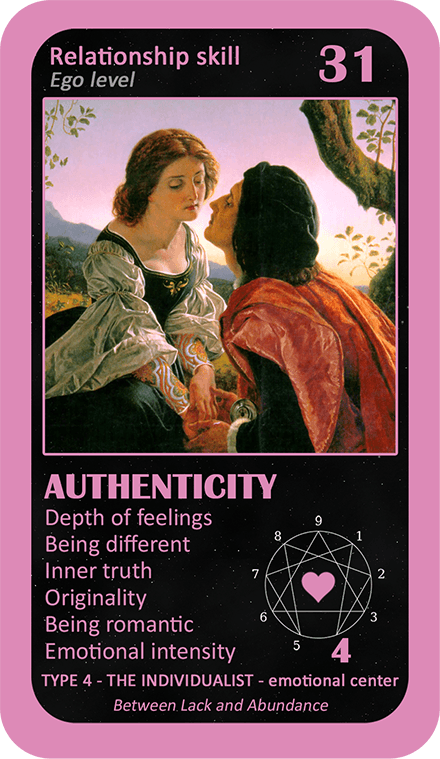
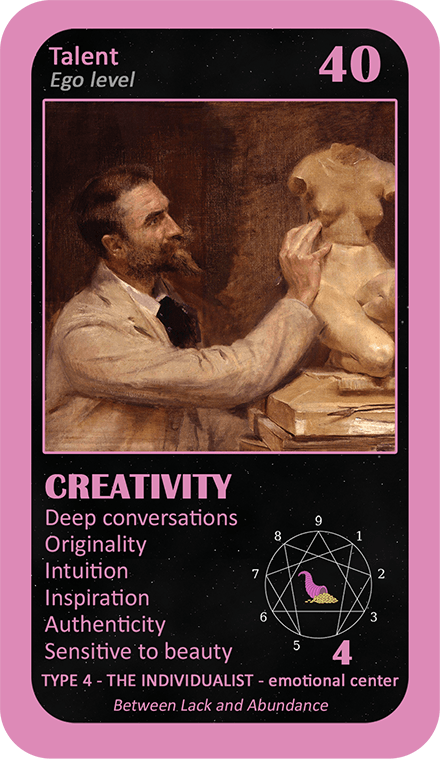
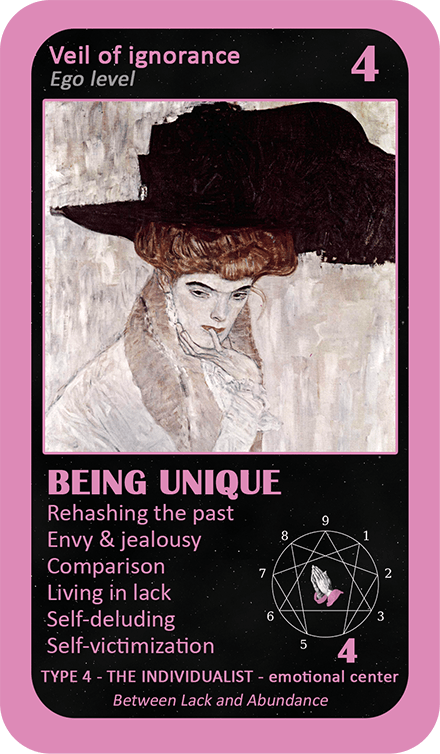
Individualists are driven by the need to be unique and authentic. They are often introspective, emotional, and seek to understand their inner identity.
Individualists are often creative and deeply in touch with their emotions. They strive for authenticity and self-expression, but can be prone to envy and melancholy. Their challenge is learning to embrace the beauty of their uniqueness without constantly comparing themselves to others.
Type 5: The Observer
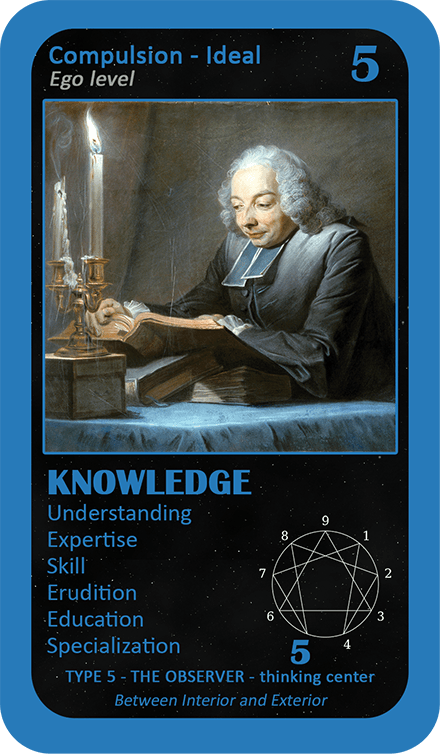
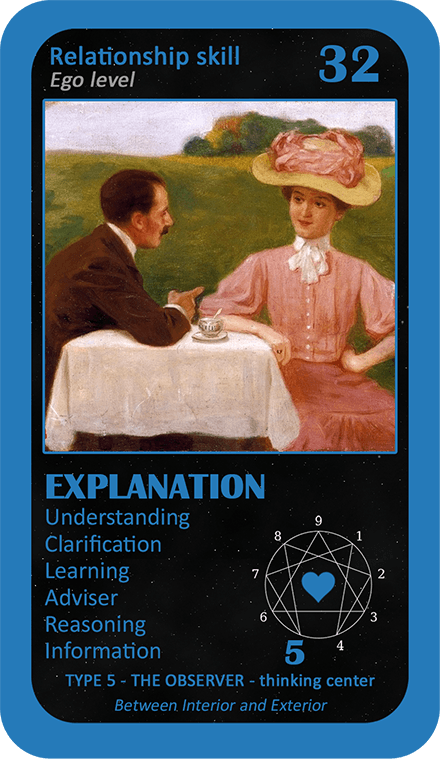
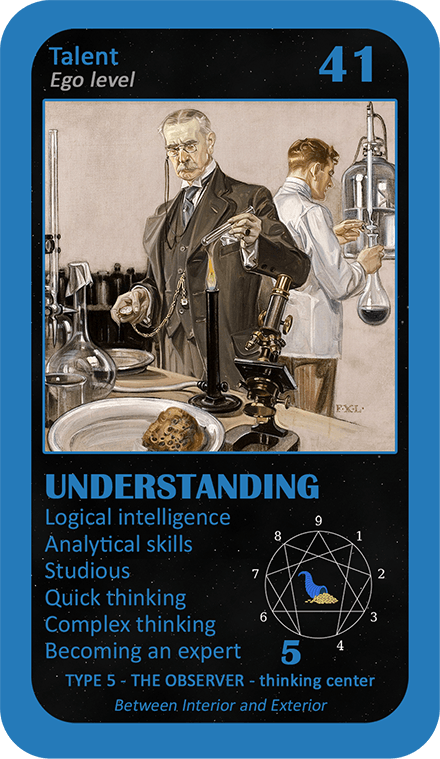
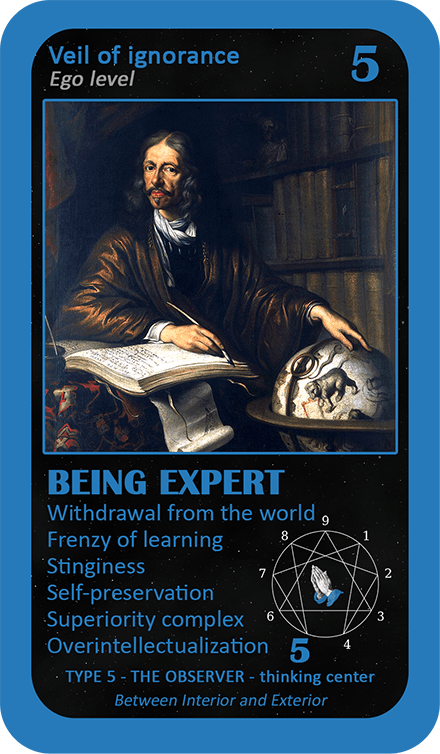
Observers are motivated by the need to understand the world and conserve their energy. They are often introspective and prefer to observe rather than directly interact with others.
Observers are analytical thinkers who value knowledge and autonomy. They can sometimes withdraw into their intellectual world, avoiding emotional interaction. To thrive, they must work to balance their need for solitude with engagement in meaningful relationships.
Type 6: The Loyalist
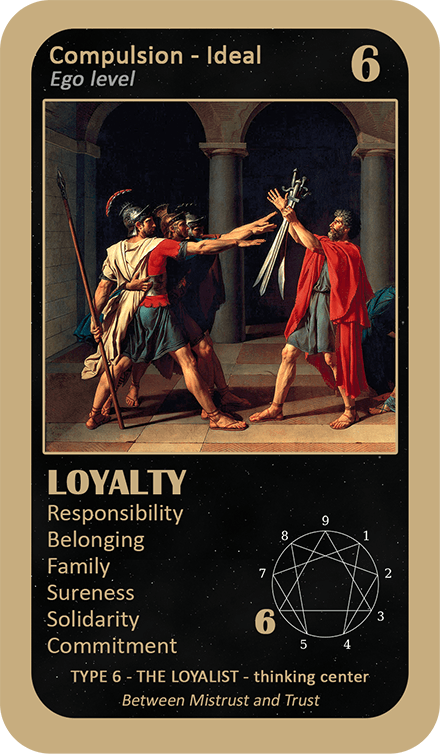
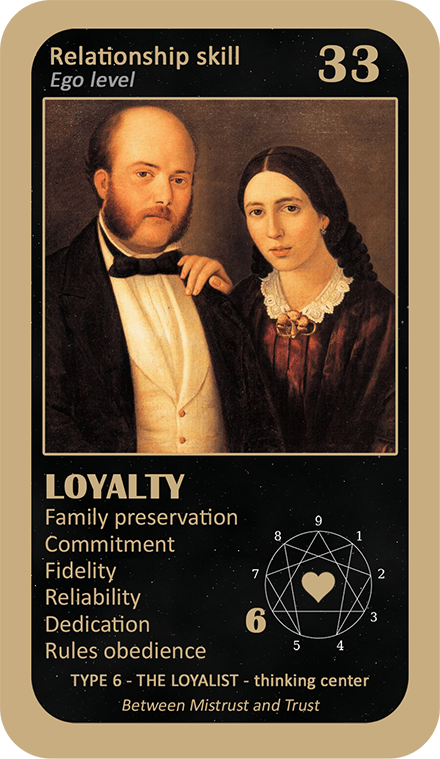
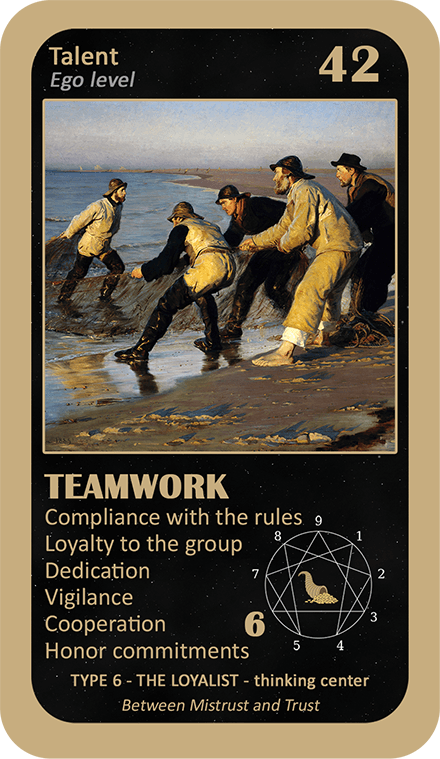
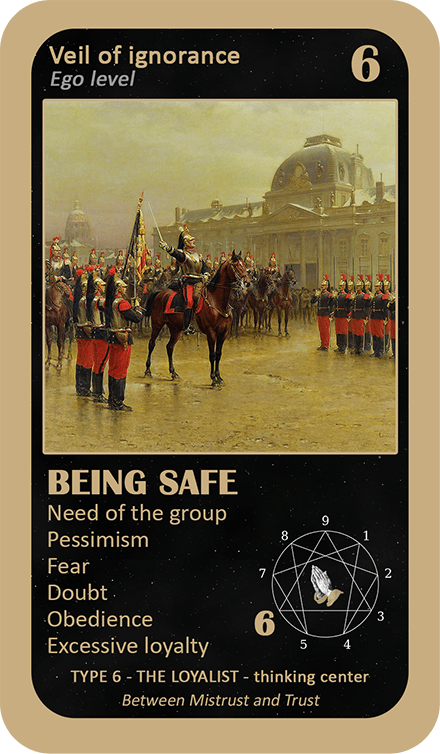
Loyalists are driven by the need for security and support. They are often vigilant, loyal, and concerned about what could go wrong.
Loyalists are reliable and responsible, often concerned with security. They can oscillate between excessive loyalty and distrust, constantly seeking certainty. Their personal growth lies in self-confidence and the ability to accept uncertainty.
Type 7: The Enthusiast
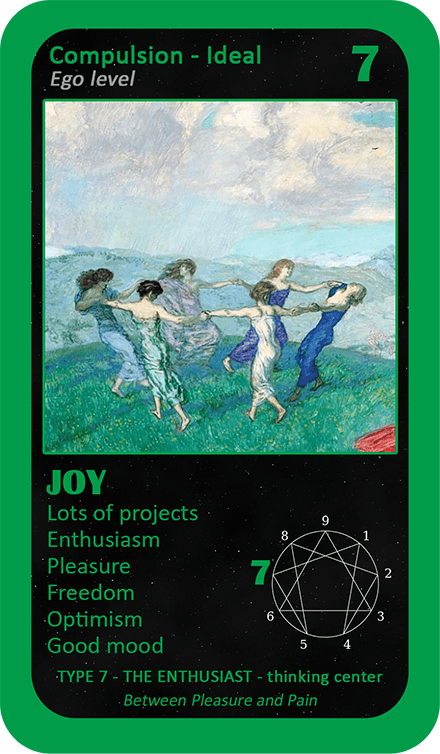
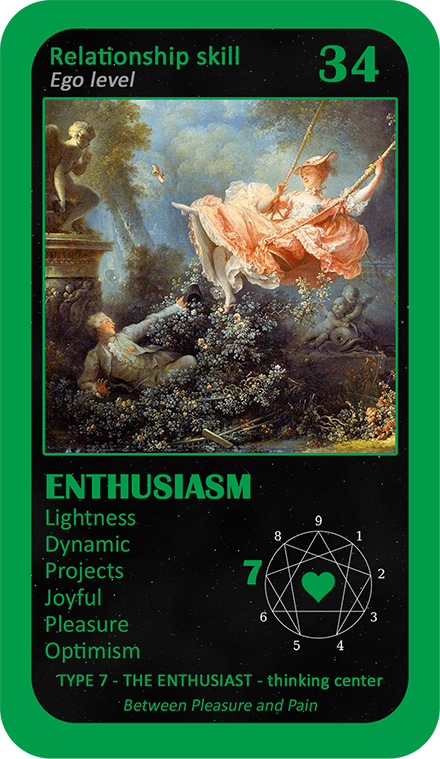
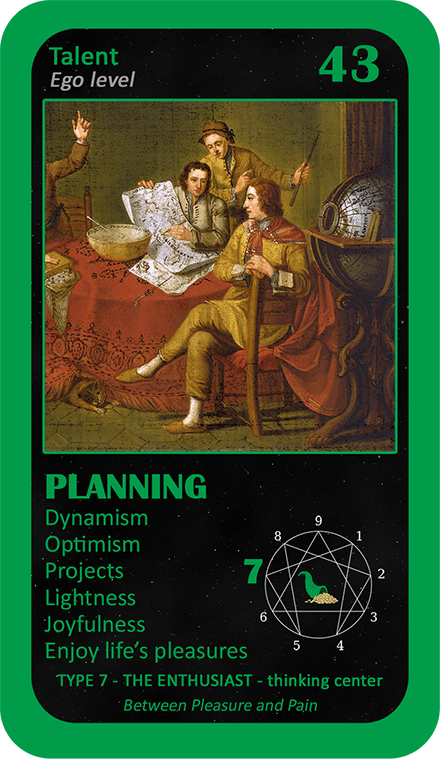
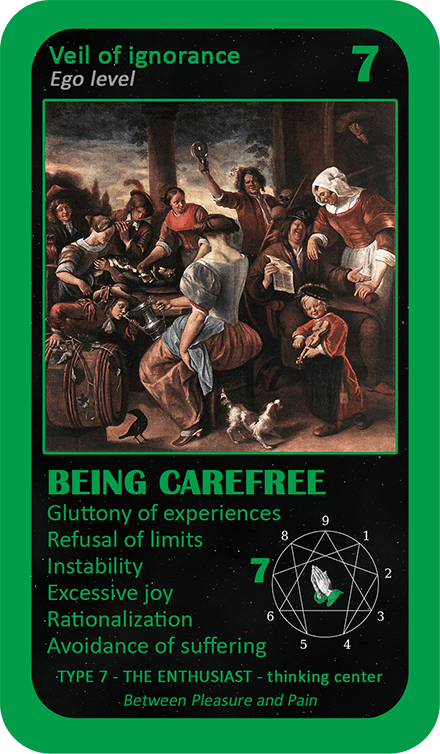
Enthusiasts are motivated by the desire to live enjoyable experiences and avoid pain. They are often optimistic, spontaneous, and seek to avoid limitations.
Enthisiasts are enthusiastic optimists, always seeking new experiences and pleasure. Their fear of pain or deprivation can lead them to avoid commitments or difficult emotions. They must learn to appreciate the present moment and embrace emotional depth.
Type 8: The Challenger
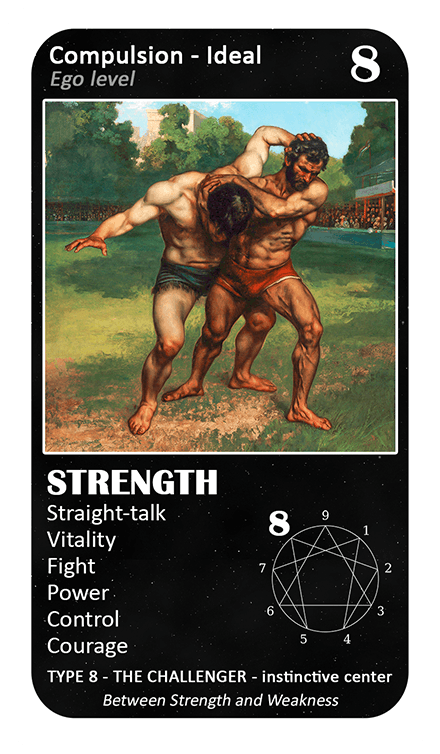
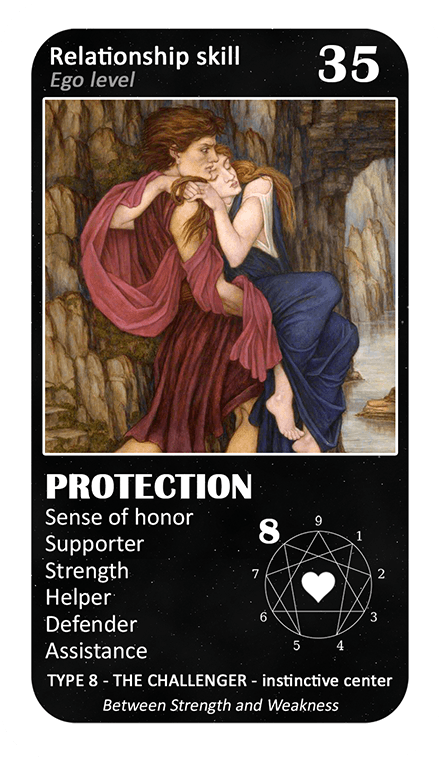
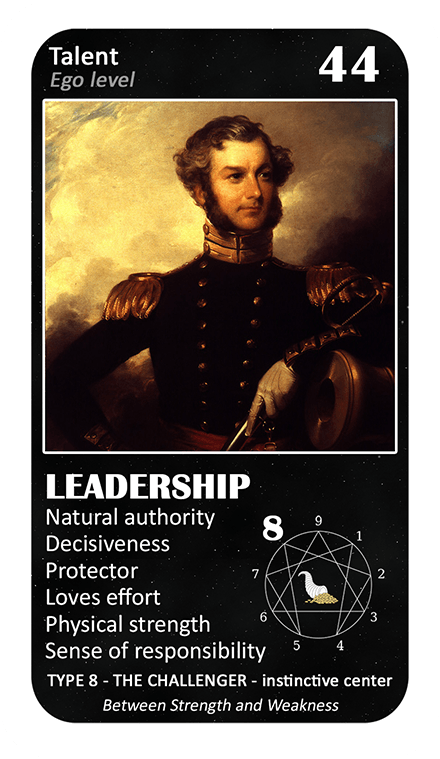
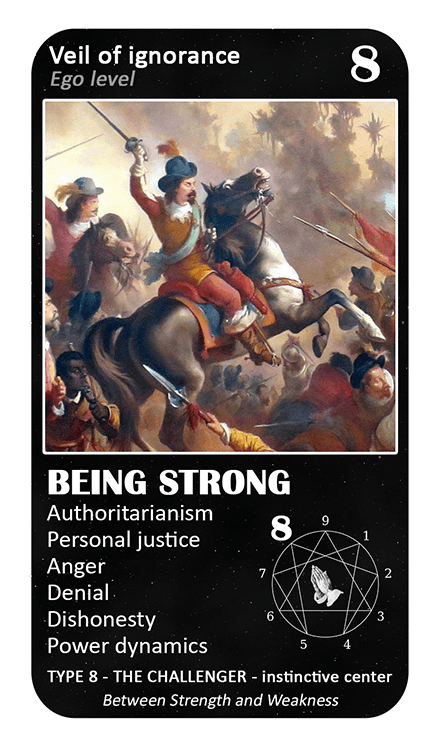
Challengers are motivated by the need for control and independence. They are often strong, assertive, and seek to protect the weak or assert themselves in situations.
Challengers are strong and assertive individuals, seeking to protect themselves and others. Their need for control can make them dominant or intimidating. Their development requires recognizing their vulnerability and the ability to trust others.
Type 9: The Peacemaker
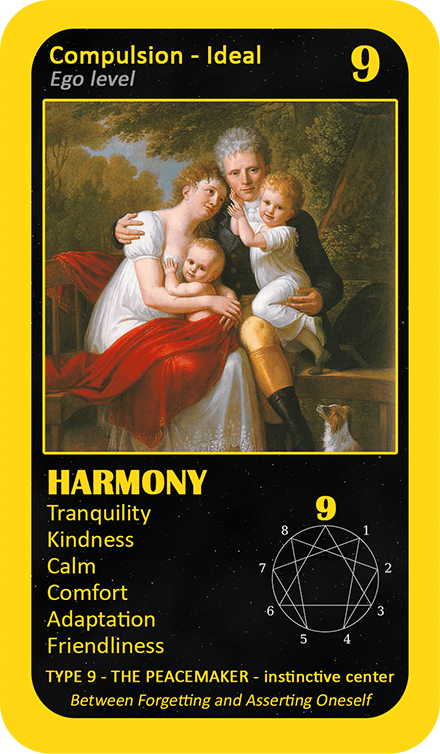
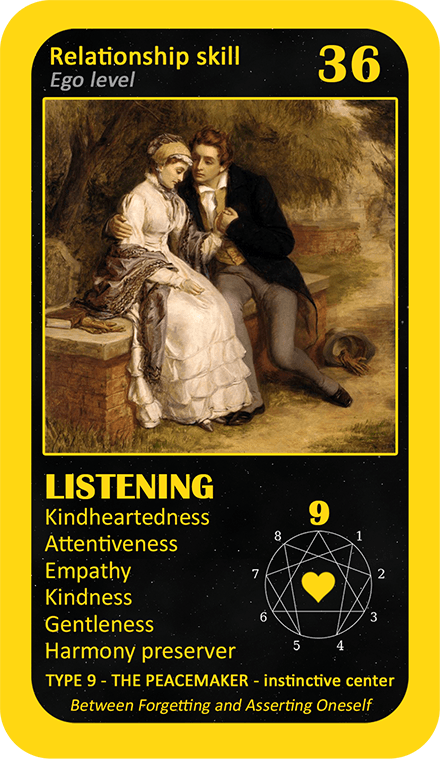
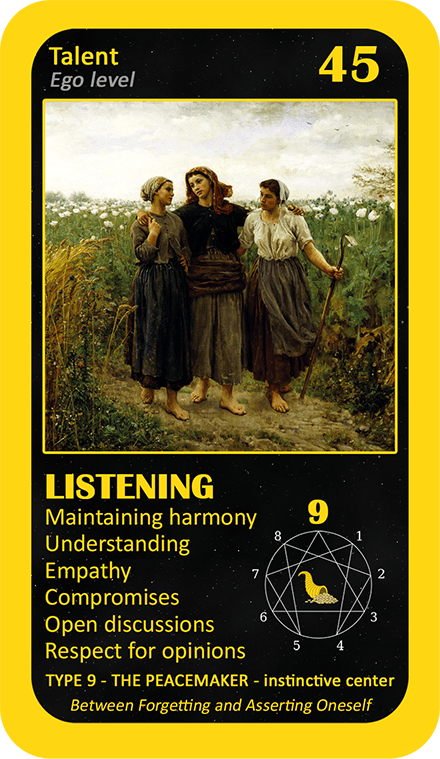
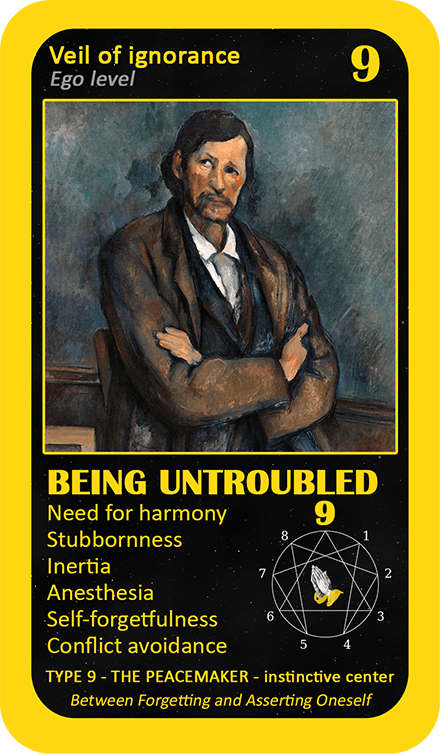
Peacemakers are driven by the need for inner peace and stability. They seek to avoid conflict and maintain harmony in their environment.
Peacemeakers are natural mediators, seeking to maintain harmony. Their desire for peace may lead them to avoid conflict or repress their own needs. They must learn to assert their own desires while respecting those of others.
The General Enneagram Oracle
Did you like the cards above? They are part of the General Enneagram Oracle.
Would you like to know more about this Oracle? All the information is here!
2. Observe Your Motivations and Behaviors
After understanding the nine types, the next step is to observe your own motivations and behaviors. What are your primary fears? What truly drives you in life? Ask yourself questions such as:
- What situations stress me the most?
- When am I happiest?
- What do I seek to avoid at all costs?
- How do I behave under pressure?
These questions can help you identify the underlying motives that influence your behavior. Keeping a journal to note your thoughts and reactions in different situations can also be useful.
3. Take an Enneagram Test
Another popular method for identifying your Enneagram type is to take an online test. Many free and paid tests are available, though some institutes have decided to stop offering them.
It’s essential to note that tests are not infallible. They can give you a general idea of your type, but they are no substitute for deep personal reflection. If you decide to start with a test, use the results as a starting point only, then further explore the suggested types through personal research.
4. Explore Wings and Subtypes
Once you have an idea of your main type, it’s time to explore your wings and subtypes. Wings are the types adjacent to your main type on the Enneagram diagram. For example, if you’re a Type 4, your wings would be Types 3 and 5.
Subtypes, on the other hand, are determined by three fundamental instincts: self-preservation, sexual (one-to-one), and social. Each main type can be influenced by one of these instincts, adding another layer of nuance to your personality.
5. Read Books and Attend Enneagram Workshops
To deepen your understanding of the Enneagram, it’s helpful to read books or participate in workshops or training sessions on the subject. Books like The Enneagram: The Nine Faces of the Soul by Richard Rohr, The Enneagram - Better Understand Your Personality and That of Those Around You by Johanna Crainmark, or Understanding and Practicing the Enneagram by Philippe Halin and Jacques Prémont, provide detailed explanations of each type and exercises to help you discover your own (affiliate links).
Attending workshops also allows you to interact with Enneagram experts and exchange ideas with others who are trying to discover their type. This can be an enlightening and enriching experience.
The Mystical Enneagram Oracle
Did you like the cards above? They are part of the Mystical Enneagram Oracle.
Would you like to know more about this Oracle? All the information is here!
6. Seek Feedback from Your Environment
Sometimes, it can be difficult to see your own motivations and behaviors clearly. Asking for honest feedback from your friends, family, or colleagues can provide valuable perspectives. Others can often perceive behavior patterns that you may not notice yourself. However, be prepared to accept this feedback openly and without judgment.
The Love Enneagram Oracle
Did you like the cards above? They are part of the Love Enneagram of Oracle.
Would you like to know more about this Oracle? All the information is here!
7. Consult an Enneagram Coach or Expert
If, after all these steps, you’re still struggling to determine your Enneagram type, consulting an Enneagram coach or expert can be a solution. These professionals are trained to ask the right questions and help you explore your deep motivations. They can provide insights you might not have considered.
Common Pitfalls in Identifying Your Enneagram Type
1. Focusing on Behaviors Instead of Motivations
One of the most common mistakes is focusing solely on outward behaviors rather than underlying motivations. For example, two people may be perfectionists, but for very different reasons. The Enneagram seeks to understand why you do what you do, not just what you do.
2. Rushing to a Conclusion
It’s tempting to quickly identify your Enneagram type, but this process takes time. Don’t rush to a conclusion. Take the time to explore each type thoroughly before identifying with one.
3. Ignoring Personal Growth
Your Enneagram type is rooted in your deep motivations, but that doesn’t mean you can’t evolve. In fact, the Enneagram is a tool for personal growth, designed to help you move beyond the limitations of your type. Don’t let yourself be confined by your type; use it as a starting point for your personal development.
The Wealth Enneagram Oracle
Did you like the cards above? They are part of the Wealth Enneagram Oracle.
Would you like to know more about this Oracle? All the information is here!
Conclusion: The Importance of Knowing Your Enneagram Type
Identifying your Enneagram type is a journey of self-discovery. It’s a process that requires patience, honesty, and a willingness to delve deeply into your motivations and behaviors. But once you’ve identified your type, you’ll have a powerful tool to better understand yourself and improve all aspects of your life.
Whether it’s to enhance your relationships, develop your career, or simply better understand why you react the way you do, the Enneagram can be a valuable guide. Take the time to explore each type, take tests, and deepen your knowledge. The path to self-discovery is one of the most rewarding journeys you can undertake.
-----
This article was written using artificial intelligence and has been verified, checked and edited by Elena. Did it help you better understand the Enneagram? Please share your thoughts or ask questions in the comments. If you would like to learn more about the Enneagram, check out Elena’s self-published Enneagram Oracles, or download Elena’s free e-book “Introduction to the Enneagram.”
Derniers articles, ils pourraient vous intéresser 😉

About
Through the articles on this blog, Elena hopes to introduce you to some of the immense knowledge of the Enneagram. Each article presents cards from the four Oracles of the Enneagram to illustrate the ideas developed in each article. Feel free to comment and share your thoughts in the comments.
The 4 Enneagram Oracles
4 Reference Initiatory Oracles
⭐ Complete ⭐ Accurate ⭐ Powerful ⭐
Perfect for professional and amateur fortune tellers and enneagram coaches
💫 The General Oracle
❤️ The Love Oracle

💰 The Wealth Oracle
🙏 The Mystical Oracle
⭐⭐⭐ Listen to your soul ⭐⭐⭐
More
Books about the Enneagram (coming soon)
Spiritual guidances
The Enneagram Oracle Boutique
🏬 Elenarts LLC
1209 Mountain Road PL NE STE N
Albuquerque, NM 87110
EIN 35-2917298
🙏 "Know thyself and thou shalt know the Universe and the Gods" - Socrates






All rights reserved. Copyright © 2021-2025 Elena